Avoid Non-Solutions: 6 Ways to Define Relevant Product Sense Solutions
During product design interviews, it's crucial to propose solutions that genuinely address specific user problems. Many candidates fall into the trap of suggesting "non-solutions" — responses that appear valid but don’t truly resolve the core issues users face. These superficial solutions may seem attractive initially but lack effectiveness and relevance, reflecting a shallow understanding of user needs.
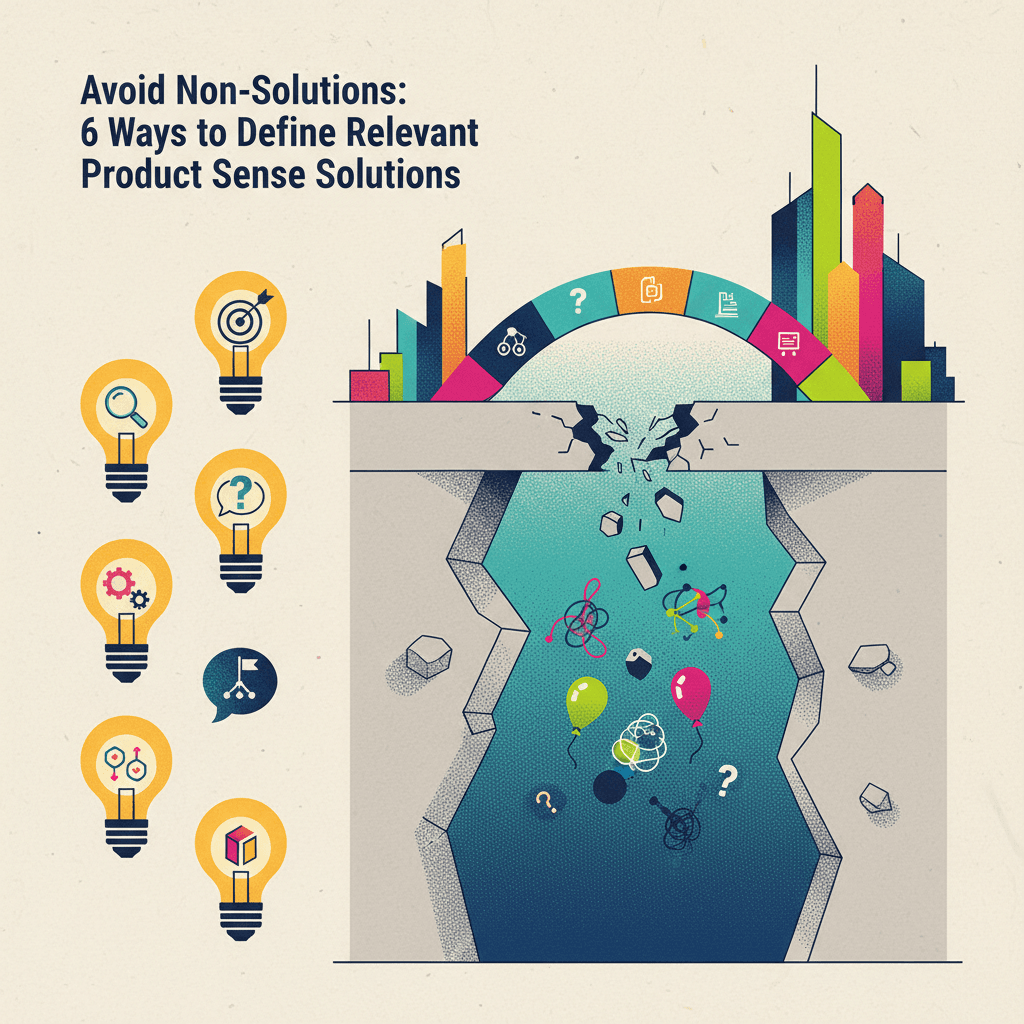
During product design interviews, it's crucial to propose solutions that genuinely address specific user problems. Many candidates fall into the trap of suggesting "non-solutions" — responses that appear valid but don’t truly resolve the core issues users face. These superficial solutions may seem attractive initially but lack effectiveness and relevance, reflecting a shallow understanding of user needs.
To ensure your solutions are impactful and pertinent, let’s explore common types of non-solutions, why they fail, and how you can avoid these pitfalls by crafting deeply user-focused answers.
Here's an example problem that we'll use to work through these issues:
You’re a PM at Meta. Build a product for helping people volunteer their time.
1. You Didn't Build Anything
Your job as a PM is to propose something to build. If your proposal could work without building anything, you have a problem.
- What it looks like. "Users will be able to use WhatsApp to organize with other volunteers."
- Why It’s a Problem: In this example, WhatsApp can already be used to organize with other volunteers without any changes made. While using existing products and solutions is okay, your proposal has to meaningfully extend the existing functionality otherwise you can't meaningfully say that you "built" anything.
- How you can avoid it: If you're building something on an existing product, emphasize what's new about your proposal. In this example, you could create a new tab for volunteer opportunities within WhatsApp that shows volunteer events that your WhatsApp contacts are going to. This implies specific software changes that would need to be made to make this possible.
2. The solution could be applied to anything.
This is related to "You Didn't Build Anything". Using existing products that have very broad use cases can sometimes cause your solution to land flat.
- What it looks like. “I’ll create specialized Facebook Groups to accommodate volunteering”.
- Why It’s a Problem: Sometimes these solutions can work, but they can often seem like an easy way out. It’s hard to make a convincing argument that you solved a somebody’s urgent need if your solution is very generic. Worst case, you come off as tonedeaf to people’s situations and goals.
- How you can avoid it: If you're going to use a general product, make sure that your solution is very, very well defined and clearly establishes what the unique features are. This is easier if you establish very clear pain points for users that lend themselves to specific answers.
3. The focus is on the technology.
Identifying a technology without explaining how it would solve the chosen pain point isn't a solution by itself.
- What it looks like. “I’m going to create an AR experience for volunteering.”
- Why it’s a problem. Technology is an implementation detail. Describing a solution primarily by reference to a technology does little by itself to explain what the user experience would look like and therefore how the solution actually solves the problem. Technology only solves a problem after it is understood what a technology would do to help someone.
- How you can avoid it. Lead with a description of the solution in terms of user experience, and only note afterward that it can be implemented with a particular technology.
Want to take the next step?
Work with MJ 1-on-1 for focused feedback, or keep preparing with the course and AI coach.
4. Didn’t solve the problem.
While you’re brainstorming solutions, it’s critical to ask yourself: “did this solve the customer pain”? Imagine you prioritized this pain point:
It’s hard for me to identify volunteer opportunities that match my skills.
- What it looks like: You propose a solution like “I’ll build a Tinder-style matching system that helps you find other people interested in volunteering.”
- Why it’s a problem: Maybe you meant to mention matching based on skills? Maybe you were thinking about a different pain point than the one you chose? Whatever the reason, the fact that the chosen solution doesn’t address the problem makes this one a big red flag.
- How you can avoid it. Write down which pain point you chose. Already refer back to it when you’re evaluating the solution. Ask: “does this pain point solve the problem?”
5. The ‘why’ wasn’t discussed
Your solution could be a good one, but if you don’t explain why it works, you haven’t made your solution as strong as it could be. What it looks like: A list of solutions with no further context. *Why it’s a problem: If you don’t explain why the solution helps the customer problem, the interviewer will not fill in the blanks even if your solution would solve the problem. How to fix it: Present your list of solutions as a Triple Anchor, which always has the “why” as the third element. To learn more, check out our course.
6. The company would never build this.
Again, your solution could be a good one, but if it’s something that the company you are building it for would never build, you’re going to have a tough time arguing that they should build it anyway. What it looks like: “We’re going to build a call center that lets people talk to a person that will help them figure out the best volunteer opportunities for you.” Why it’s a problem: While Meta could build this solution, it’s unlikely that they ever would. Meta doesn’t even have a call center to support its existing products, so it wouldn’t make sense for them to build one to support this relatively minor feature. How to fix it: When you first discuss the problem, talk about the strengths of the company. That way, when you get to solutions, you already have a reason to think one solution is a better choice than others.
Bonus Insight: Don’t worry about being original.
It’s much more important to have your solution genuinely solve the problem at hand than for it to be original. Many of these interview questions have been around for a long time, so it’s unlikely that you will come up with something very original that both solves the problem and is realistic from the perspective of the company. In other words, focus on the credible, not the wildly original.
To explore this topic in more detail, check out our course. You’ll get more insights and a chance to work with our AI coach.
Written by

Former Meta Senior PM. #1 rated PM interview coach on IGotAnOffer with 538+ clients and a 49% rebook rate.
Want to take the next step?
Work with MJ 1-on-1 for focused feedback, or keep preparing with the course and AI coach.
Related Articles

How Many PM Interview Coaching Sessions Do You Need? Data From 467 Sessions
I analyzed 467 completed PM interview coaching sessions across 217 clients. Reported offer rates rose sharply from one to three visible sessions—and the pattern survives tougher cohort checks.
August 7, 2026
When Your North Star Isn't Yours
When you own a feature instead of the whole product, using the business north star (e.g. total orders) misattributes success and hides your real impact. Find out the best way to define success and avoid creating a dreaded vanity metric.
March 19, 2026
Introducing Product Simply Office Hours with MJ
Product management interviews can feel like a high-stakes, solitary endeavor. Product Simply is excited to introduce Office Hours, offering direct access to expert coaching and a community of high-caliber peers to refine your approach and boost your confidence.
March 2, 2026