Not 'I': The Strategic Power of 'We' in Conflict Resolution Stories
In behavioral interviews, the mantra is often 'use I.' But for conflict resolution questions, shifting to 'we' can powerfully signal collaboration and partnership, transforming a challenge into a story of collective success. Discover when and how to strategically use 'we' to elevate your PM interview responses.
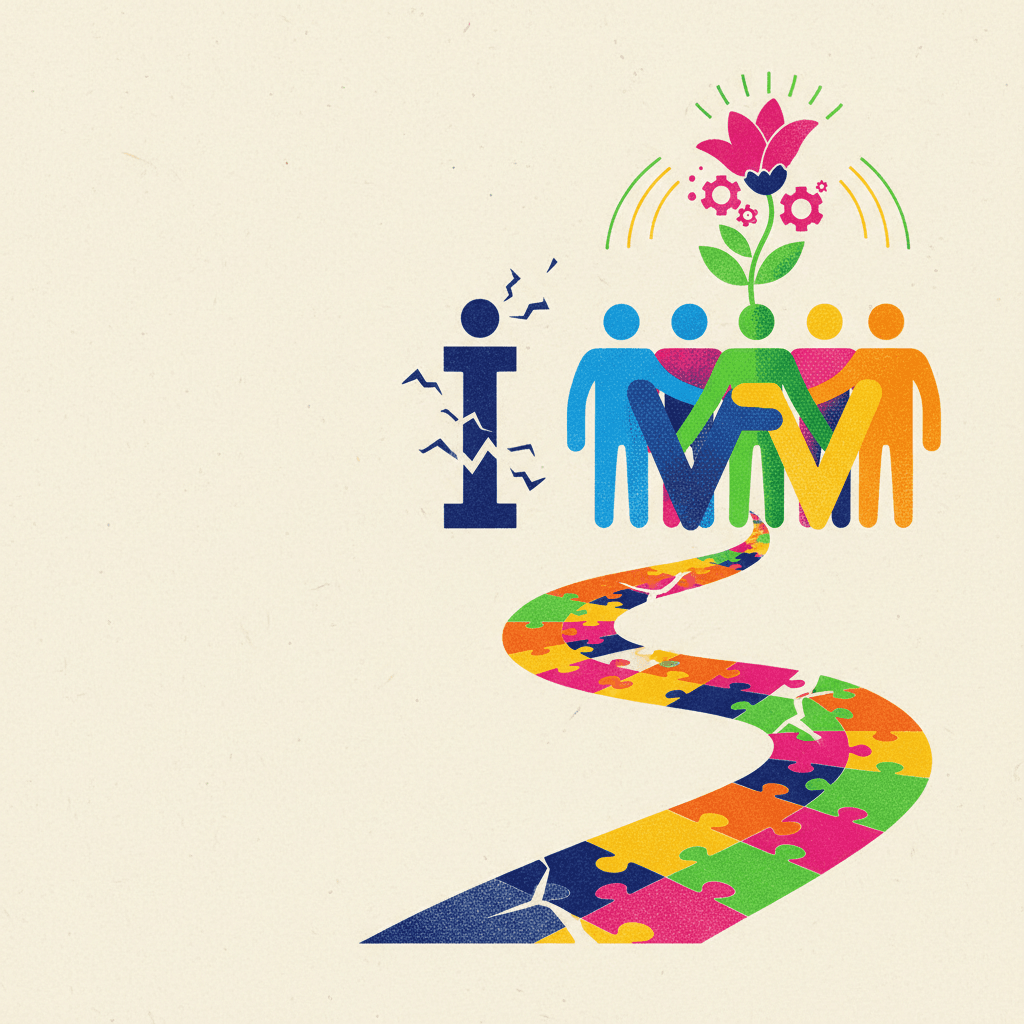
In the world of product management interviews, a golden rule for behavioral questions is to emphasize your individual contributions using 'I.' Interviewers want to understand your agency, your actions, and your impact. And for the vast majority of 'tell me about a time when...' scenarios, sticking to 'I' is absolutely the right play. It keeps the spotlight on your leadership and accountability.
But what if I told you there’s a powerful, often overlooked exception to this rule? A specific scenario where strategically shifting to 'we' can dramatically elevate your response and showcase a crucial product leadership trait?
That scenario is the dreaded 'tell me about a time you had a conflict with a colleague' question.
The 'I' Rule: A Foundation of Accountability
First, let's reaffirm why the 'I' rule exists. Product managers are expected to own their decisions, drive initiatives, and take responsibility for outcomes, both good and bad. When you're asked about launching a successful feature, solving a complex technical problem, or navigating a challenging market, the interviewer wants to hear about your thought process, your actions, and your results. Phrases like 'I identified the root cause,' 'I proposed a solution,' or 'I led the team to deliver' clearly demonstrate your personal contributions and leadership qualities. It's about running your show, as we often say in our coaching sessions, showcasing your unique skills and approach.
This focus on 'I' is critical for conveying substance and clarity in your narrative, ensuring the interviewer understands your direct impact on the situation. But the conflict question introduces a different dynamic.
Conflict: More Than Just Your Story
The 'tell me about a conflict' question isn't just about how you acted in isolation. It's fundamentally about interpersonal dynamics. It asks how you navigated a disagreement with another person or a group, and how you moved towards a resolution that ideally benefited all parties. It's less about individual heroics and more about influence, collaboration, and the ability to transform friction into productive outcomes.
Here’s where the traditional 'I' can sometimes fall short. If your entire resolution phase is still framed as 'I convinced them,' or 'I made them see my point,' it can inadvertently signal a top-down, rather than a collaborative, approach to conflict. While you are the hero of your story, the resolution of a conflict, especially a successful one, often involves building bridges and fostering alignment, not just winning an argument.
The Strategic Shift: Embracing 'We'
This is where 'we' becomes your secret weapon. After you've established the initial conflict, described your objective, fact-based actions (as discussed in Product Simply's lessons on 'The Conflict Question: Judgmental vs. Fact-Based Language')—and crucially, when you begin to describe the resolution and positive outcome—shifting to 'we' can be incredibly powerful.
Consider a candidate I coached, Sarah, who was struggling with this exact question. She had a great story about a disagreement with an engineering lead over a project timeline. Her initial telling was entirely 'I': 'I presented data,' 'I explained the risks,' 'I negotiated a new timeline.' While her actions were strong, the resolution felt a bit like a monologue. I asked her, 'What happened after you presented the data? How did the engineering lead respond? What was the shared understanding you reached?'
After some reflection, Sarah reframed her conclusion: 'After we reviewed the data together, we realized the initial estimates were indeed aggressive. We then collaboratively identified key dependencies and we agreed on a revised, more realistic timeline that addressed both engineering concerns and business needs. As a result, we successfully delivered the product on time and with higher quality.'
Want to take the next step?
Work with MJ 1-on-1 for focused feedback, or keep preparing with the course and AI coach.
Notice the difference. The 'I' still highlights her initial leadership in bringing the data to the table and driving the conversation. But the shift to 'we' for the resolution phase instantly conveyed a transformation from conflict to partnership. It showed that she didn't just 'win,' but that she built consensus and achieved a shared outcome.
How to Weave in 'We' Effectively
This isn't about abandoning your agency. It's about demonstrating the highest form of influence: turning a potential adversary into an ally, and a conflict into a collaborative success. Here's how to do it:
- Start with 'I' for Your Initial Actions: When describing the situation and your initial attempts to understand and address the conflict, stick to 'I.' 'I scheduled a meeting,' 'I presented my perspective,' 'I actively listened to their concerns.' This establishes your ownership and problem-solving initiative.
- Transition to 'We' for Shared Understanding and Solutioning: Once you've taken your initial steps and a path towards resolution begins to emerge, shift to 'we.' Use it when describing mutual discovery, brainstorming, or joint decision-making. 'We explored several options,' 'We collaboratively identified a path forward,' 'We aligned on a new strategy.'
- Emphasize 'We' for the Positive Outcome and Learning: When discussing the results, focus on the collective achievement. 'We successfully launched the feature,' 'We improved our cross-functional communication,' 'We learned valuable lessons about early stakeholder engagement.' This highlights the lasting impact of the resolved conflict on the team or project.
The 'Why' Behind the 'We'
Why does this matter so much? Because product management is inherently a team sport. PMs are constantly influencing without direct authority, resolving disagreements between design and engineering, and aligning diverse stakeholders towards a common goal. A leader who can transform conflict into collaboration, rather than simply dominating a discussion, is invaluable.
When an interviewer hears 'we' in the resolution of a conflict story, they receive powerful signals:
- Collaboration: You're a team player who values input from others.
- Influence and Empathy: You can understand different perspectives and guide people towards a shared solution, even when starting from disagreement.
- Partnership: You build strong working relationships that endure beyond immediate challenges.
- Shared Ownership: You foster an environment where everyone feels invested in the outcome.
- Maturity: You move beyond individual blame to focus on collective progress.
This strategic use of 'we' demonstrates not just conflict resolution, but a deeper understanding of team dynamics and effective leadership—qualities that are absolutely critical for thriving in a PM role at any top tech company.
Conclusion: Turning Conflict into Partnership
While the 'I' remains foundational for most behavioral questions, the 'tell me about a conflict' scenario presents a unique opportunity. By strategically shifting to 'we' in the resolution phase, you can transform a story of individual action into a compelling narrative of collaboration, influence, and shared success. This isn't just about choosing words; it's about demonstrating a core product leadership competency: the ability to build alignment and turn potential adversaries into partners.
Reflect on your own conflict stories. Have you effectively conveyed this journey from 'I' to 'we'? Refining this nuance can be a game-changer. For more in-depth frameworks and personalized coaching on mastering every aspect of your PM interview, explore the expert-led courses and 1-on-1 coaching sessions at ProductSimply.com. Our goal is to help you truly run your show and land that dream PM role.
Written by

Former Meta Senior PM. #1 rated PM interview coach on IGotAnOffer with 538+ clients and a 49% rebook rate.
Want to take the next step?
Work with MJ 1-on-1 for focused feedback, or keep preparing with the course and AI coach.
Related Articles

How Many PM Interview Coaching Sessions Do You Need? Data From 467 Sessions
I analyzed 467 completed PM interview coaching sessions across 217 clients. Reported offer rates rose sharply from one to three visible sessions—and the pattern survives tougher cohort checks.
August 7, 2026
When Your North Star Isn't Yours
When you own a feature instead of the whole product, using the business north star (e.g. total orders) misattributes success and hides your real impact. Find out the best way to define success and avoid creating a dreaded vanity metric.
March 19, 2026
Introducing Product Simply Office Hours with MJ
Product management interviews can feel like a high-stakes, solitary endeavor. Product Simply is excited to introduce Office Hours, offering direct access to expert coaching and a community of high-caliber peers to refine your approach and boost your confidence.
March 2, 2026