North Star Metrics: Why Averages Fall Short and Totals Lead the Way
A North Star Metric (NSM) should always reflect growth, pushing your product "up and to the right." Discover why static averages fail as guiding lights and how to leverage them as critical countermetrics to ensure quality alongside quantity.
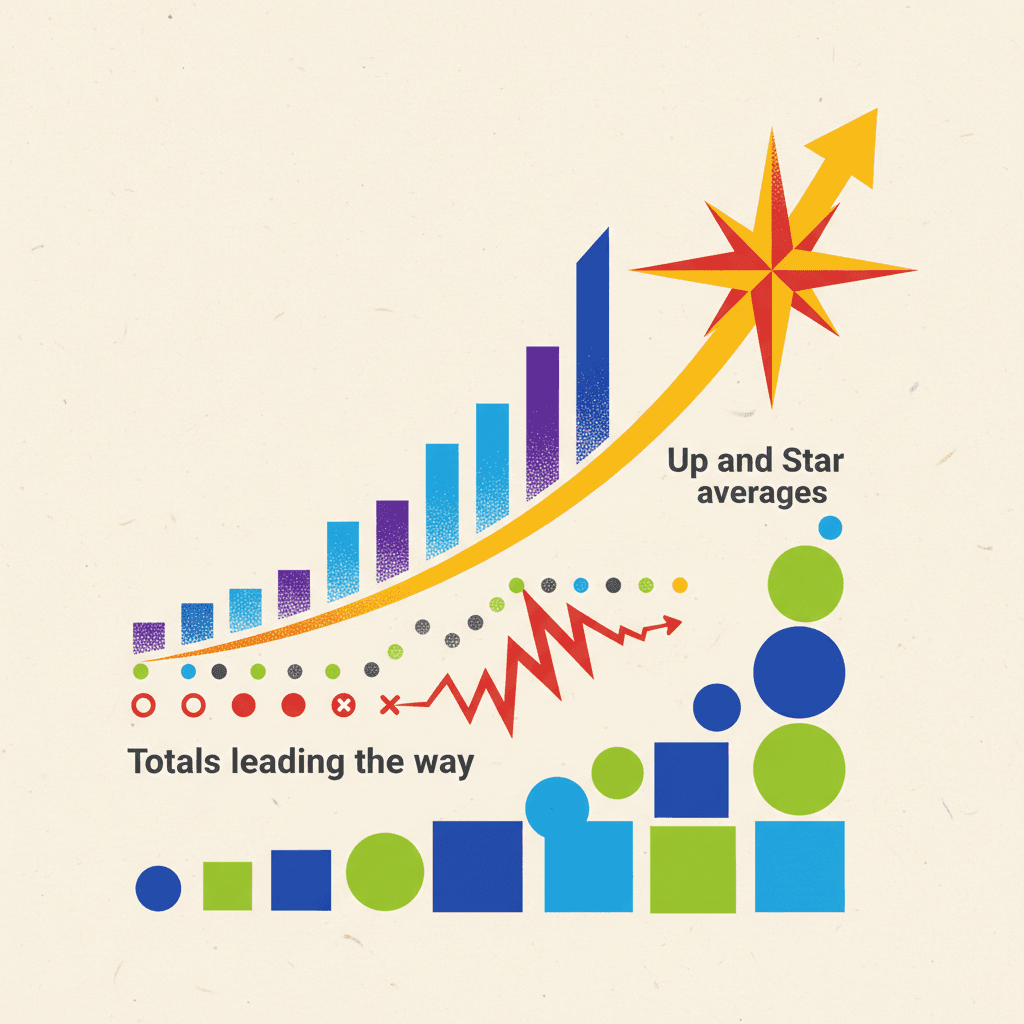
Every product team dreams of that clear, compelling metric that lights the path forward – the North Star Metric (NSM). It's the single, crucial number that guides decisions, inspires teams, and signals true product success. But here's a critical insight many product managers miss: your NSM should never, ever be an average.
Think about it: a North Star Metric needs to represent progress, growth, and forward momentum. We want to see that number moving "up and to the right," indicating that our product is delivering more and more value to users. Averages, by their very nature, are static. They tell you about a current state, a snapshot, but they rarely capture the dynamic, cumulative value that defines a thriving product.
The Pitfall of Averages as Your North Star
I've seen countless product teams fall into the trap of choosing an average as their NSM, often with well-intentioned but ultimately misleading results. Imagine a team whose North Star is "average session duration." Sounds reasonable, right? They want users to spend more time engaging with their product. But what happens if they launch a successful feature that attracts a large influx of new users who initially have shorter session durations? The overall "average session duration" might actually drop, even though the product is clearly growing and delivering more total value across a larger user base. The team's North Star would signal decline, despite real success.
This is why an NSM must always be a total. It needs to encapsulate the aggregate value delivered across all users. Whether it's "total time spent watching videos," "total number of transactions completed," or "total messages sent," a total metric inherently reflects growth. If more users join, the total goes up. If existing users engage more deeply, the total also goes up. It's the only way to get that consistent "up and to the right" signal that truly inspires and aligns a team.
Where Averages Shine: Guarding Quality and Health
So, if averages are out for your North Star, are they useless? Absolutely not! Averages are incredibly powerful when used in their rightful place: as crucial countermetrics and indicators of product health and quality. While your NSM drives quantity and growth, your averages ensure you're not compromising on the product's integrity along the way.
Think of it as having both a gas pedal and a brake. Your North Star is the gas pedal, pushing you forward. Your average-based countermetrics are the brakes, making sure you don't speed off a cliff. For instance:
- Error Rates: As you drive total engagement, are you seeing an increase in "average crashes per user session"? This average helps you quickly identify stability issues.
- Customer Satisfaction: Is your "average NPS score" or "average star rating" dipping as you scale? This signals potential quality degradation.
- Latency: "Average page load time" or "average response time" can alert you if performance is suffering under increased load.
- Engagement Depth: Even if "total watch time" is your NSM, tracking "average completion rate per video" or "average number of unique features used per session" can tell you if the quality of engagement is being maintained or if users are just superficially interacting.
These averages provide invaluable context. They help you balance the pursuit of growth with the essential need to maintain a high-quality, reliable, and satisfying user experience. Neglecting them in favor of a sole growth metric is like building a skyscraper without checking its structural integrity.
Want to take the next step?
Work with MJ 1-on-1 for focused feedback, or keep preparing with the course and AI coach.
A Coaching Anecdote: Shifting Perspective
I recall a coaching session with a candidate who was preparing for an interview at a major social media company. Their proposed NSM for a new content feature was "average number of shares per post." While it sounded good on the surface, we quickly delved into the limitations. What if the platform's overall user base grew significantly, but the total number of shares didn't keep pace? Or, what if a few viral posts skewed the average, hiding a decline in overall sharing activity? Their average NSM wouldn't capture the full picture of value creation.
We discussed shifting to a "total" NSM, like "total unique shares per day across the platform." Then, their "average shares per post" transformed into a powerful quality countermetric. It became a signal: if total shares were growing but average shares per post was declining, it meant they needed to investigate content quality or discoverability. This shift wasn't just about picking a different number; it was about fundamentally changing how they thought about product success and potential pitfalls, allowing them to see both the forest and the trees.
Practical Tips for Identifying Your Metrics
- Challenge the Average: If you hear an average proposed as an NSM, immediately ask: "What total value might this metric be obscuring?" or "What happens if our user base grows but this average stays flat?" This critical thinking will impress interviewers and lead you to better metrics.
- Focus on Total Value Delivered: When defining your NSM, always aim for a metric that sums up the core behavior across all users. If your product's purpose is for people to watch videos, your NSM should be "total time spent watching videos per day" or "total videos watched per day"—not "average time per user."
- Pair Your NSM with Countermetrics: For every growth-oriented North Star, identify at least one quality-oriented average as a countermetric. What's the worst possible outcome if you optimize only for your NSM? That's what your countermetric should guard against. For example, if your NSM is "total orders placed," a countermetric might be "average return rate" or "average customer support tickets per order."
For a deeper dive into crafting robust North Star Metrics and the crucial countermetrics that safeguard your product's health, ProductSimply.com offers expert-led courses and 1-on-1 coaching sessions that have helped candidates land roles at top tech companies. These resources provide the frameworks and nuanced understanding to confidently navigate complex metrics discussions.
Conclusion
Ultimately, a truly effective product strategy requires both vision and vigilance. Your North Star Metric provides that vision, dynamically guiding your team toward growth and impact. But it's your carefully selected average-based countermetrics that provide the necessary vigilance, ensuring that your pursuit of quantity never comes at the cost of quality.
Embrace this dual approach, and you'll build products that not only grow but also endure, delivering consistent value for both your users and your business.
Written by

Former Meta Senior PM. #1 rated PM interview coach on IGotAnOffer with 538+ clients and a 49% rebook rate.
Want to take the next step?
Work with MJ 1-on-1 for focused feedback, or keep preparing with the course and AI coach.
Related Articles

Ultimate Answers: Tell me about a time when you had to rally a team
Rallying a team is more than just motivational speeches; it's about deeply understanding what's holding them back and strategically providing the support they need. This crucial PM interview question tests your diagnostic skills and empathetic leadership, not just your ability to inspire.
February 28, 2026
Product School vs. Product Simply: Which is Right for Your PM Interview Prep?
Navigating the crowded landscape of Product Management interview prep can be daunting. This article breaks down two popular options, Product School and Product Simply, to help you decide which platform best aligns with your career goals and interview preparation needs.
February 15, 2026
Stumped by Suction: Measuring Success for a Robot Vacuum
Measuring product success isn't always straightforward. A recent coaching session highlighted the challenge of defining key metrics for a robot vacuum, revealing how deep product thinking is required to identify a true North Star.
February 15, 2026