The AI-Powered Product Build Interview: My Wake-Up Call and the New Playbook for PMs
The future of product management interviews is here, demanding proficiency with GenAI tools to build products on the fly. I failed my first one, but the lessons learned completely transformed my approach to product development and even ProductSimply.com.
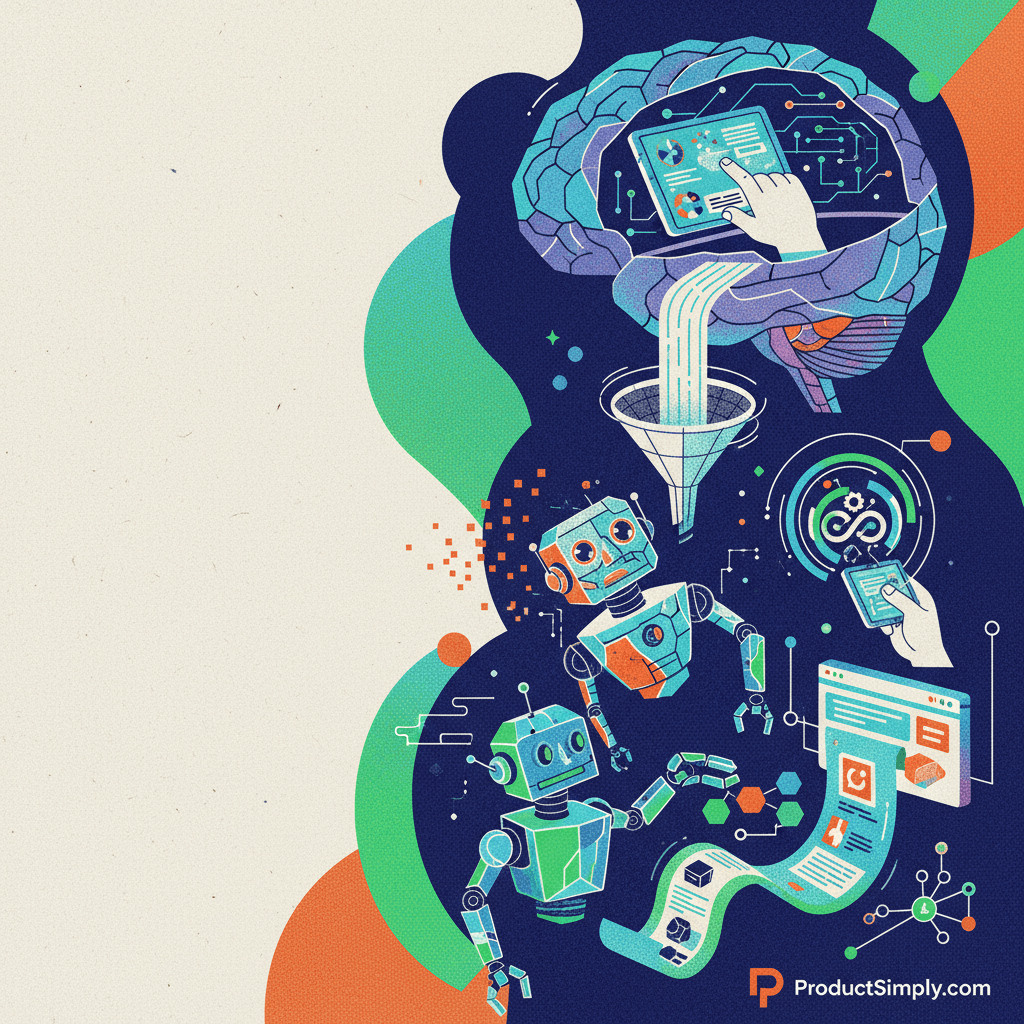
The landscape of product management is constantly evolving, and with it, the demands of the PM interview. We've mastered behavioral questions, navigated complex product sense cases, and aced analytical challenges. But there's a new beast emerging from the depths of technological innovation: the AI-powered product build interview. Some are calling it a 'vibe coding interview,' but for product managers, it's far more profound than just code – it's about leading product development in the age of generative AI.
I recently had my first encounter with this new format, and I'll be blunt: I failed. Spectacularly. The interview required me to leverage GenAI tools to rapidly build a website, demonstrating not just technical familiarity but a coherent, AI-first product development workflow. I walked in confident in my PM skills, but quickly realized my traditional approach was obsolete in this new paradigm. It was a humbling, yet incredibly illuminating, experience.
The Traditional Playbook Meets Its Match
For years, the product design interview has tested our ability to think empathetically about users, define clear goals, identify pain points, and propose well-reasoned solutions. We've learned to structure our thoughts, articulate our 'whys,' and build compelling arguments. These foundational skills remain critical, but the how we apply them is changing dramatically. My mistake in that interview was treating the GenAI tools as mere assistants to a traditional process, rather than as integral partners that demand a re-imagined workflow.
I found myself fumbling, trying to prompt a large language model (LLM) for a full solution, then manually debugging and refining. It was inefficient, disorganized, and utterly failed to demonstrate the seamless integration of AI that the interviewer was looking for. The 'vibe' wasn't about raw coding speed; it was about orchestrating AI to accelerate every stage of product creation, from ideation to iteration. It was a wake-up call that the future of product development isn't just with AI, but through AI.
My Post-Mortem: A New Playbook Emerges
After picking myself up, I reflected deeply on what went wrong and how I could have approached it differently. The realization was stark: you can't just bolt AI onto an old process. You need a new playbook, one that treats AI as a co-pilot, a strategic partner, and a force multiplier from the very beginning. Here's what I learned, a methodology that has since revolutionized how I think about building products:
1. Generate Strategic Plans and Briefs with AI, First
Don't jump straight to asking AI to 'build a website.' Instead, start at the strategic layer. Leverage AI to help you define the product's vision, target users, and core value proposition. I learned to use AI to:
- Draft Product Briefs: Input a problem statement and ask the AI to generate a comprehensive product brief, including potential user segments, high-level goals, and key performance indicators. This ensures a solid foundation.
- Develop Design Guidelines: Prompt the AI to create design principles and aesthetic guidelines based on the target audience and brand identity. This provides a consistent framework for later design and development.
- Outline Feature Roadmaps: Use AI to brainstorm potential features, prioritize them based on impact and feasibility (concepts we cover in Product Simply's course), and map out a phased launch plan. This creates a strategic blueprint before any code is written.
This upfront strategic work, assisted by AI, not only clarifies the direction but also provides rich context for subsequent AI-driven development. It's about leveraging AI for its analytical and generative power before its execution capabilities.
2. Create a 'Contextual Repository' for Your AI Agent
This was perhaps the most critical learning. AI agents, whether specialized for code generation or broader tasks, perform best when they have a deep, consistent understanding of your project. My mistake was giving piecemeal instructions. The solution? A dedicated 'contextual repository.'
Imagine a single, organized folder or document where all your AI-generated plans, design guidelines, and strategic briefs live. This becomes the 'brain' of your AI agent. When you're ready to build, you point your AI to this repository as its primary source of truth. This could be a GitHub repo, a shared document, or a dedicated knowledge base. The key is that the AI agent can consistently reference this context, ensuring its outputs are aligned with your overall vision.
3. Give Your AI Agent Comprehensive Context, Then Iterate
Want to take the next step?
Work with MJ 1-on-1 for focused feedback, or keep preparing with the course and AI coach.
With your repository in place, the next step is to feed your AI agent all the context it needs. This isn't just a brief prompt; it's a rich, multi-faceted instruction that leverages your AI-generated strategic documents.
Instead of: "Build me a website for events."
Try: "Using the product brief, design guidelines, and feature roadmap located in [repository_link], create a fully functional, high-availability event ticketing website. Start with the user authentication and event listing components. Prioritize clean UI and secure backend infrastructure as per the design guidelines. Iterate on the user experience based on the persona descriptions in the brief."
The power here is that the AI isn't guessing; it's executing against a well-defined, AI-assisted strategy. From this point, development becomes a continuous loop of:
- AI Generates: The agent produces code, UI components, or design mockups.
- You Review & Refine: You, the PM, provide targeted feedback, identify gaps, or request modifications.
- AI Re-Generates/Optimizes: The agent incorporates your feedback, drawing from the shared context to produce improved outputs.
This iterative dance, guided by your strategic input and the AI's rapid generation, is the new rhythm of product development.
From Theory to Reality: Rebuilding ProductSimply.com with AI
I immediately put these lessons into practice. The first product I decided to rebuild from the ground up, leveraging this new GenAI-driven methodology, was ProductSimply.com itself. What started as a coaching platform with a strong curriculum and 1-on-1 sessions transformed into something far more ambitious and AI-powered.
By feeding my AI agent strategic briefs and design guidelines for an enhanced user experience, I was able to rapidly prototype and launch features I had previously only dreamed about. We introduced peer mock interview matching, allowing candidates to practice with each other using an AI-driven scheduling system. We also launched AI-driven coaching transcript analysis tools, providing instant, personalized feedback on mock interview performance based on our proven frameworks. These features, developed at unprecedented speed, were a direct result of embracing this new, AI-first product development playbook.
The Broader Implications for Product Managers
This isn't just about coding; it's about leadership. Product managers are no longer just orchestrating human teams; we're orchestrating human and AI teams. This demands new skills:
- Advanced Prompt Engineering: The ability to craft clear, comprehensive, and contextual prompts for AI agents.
- AI Workflow Design: Understanding how to integrate AI tools into every stage of the product lifecycle for maximum efficiency.
- Contextual Memory Management: Ensuring your AI agents have access to a consistent, up-to-date knowledge base of your product's vision and requirements.
- Critical Evaluation of AI Output: Knowing when AI's output is good enough, when it needs refinement, and when to pivot.
The 'vibe' of these new interviews is indeed real, and it's coming for you. It's a test of your adaptability, your forward-thinking mindset, and your ability to lead in an AI-accelerated world. Those who can effectively leverage GenAI tools to articulate strategy, design, and build will be the product leaders of tomorrow.
Preparing for the AI-Powered Future
So, how can you prepare for this new reality?
- Experiment Relentlessly: Get hands-on with GenAI coding tools like Cursor, Claude Code, or GitHub Copilot Workspace. Don't just observe; actively try to build small projects.
- Master Contextual Prompting: Practice giving AI agents comprehensive, multi-part instructions that reference a shared knowledge base. Think like a director, not just an order-taker.
- Focus on the 'Why' and 'What': Your core PM skills of defining goals, understanding users, and articulating strategic 'whys' become even more critical. AI can handle the 'how' much faster, but it relies on your clarity of vision.
- Embrace Iteration: Understand that AI-driven development is a continuous loop of generation and refinement. Learn to provide precise, actionable feedback.
- Build a 'Personal AI Playbook': Develop your own structured approach for using AI in product development. What tools will you use? How will you organize context? What's your iterative feedback loop?
The future of product management isn't just about understanding AI; it's about actively shaping products with AI. My interview failure was a painful, but necessary, lesson. It spurred me to rethink, rebuild, and ultimately, to equip myself and Product Simply with the tools to thrive in this exciting new era. Don't get left behind – the AI revolution is waiting for you to lead it.
Written by

Former Meta Senior PM. #1 rated PM interview coach on IGotAnOffer with 538+ clients and a 49% rebook rate.
Want to take the next step?
Work with MJ 1-on-1 for focused feedback, or keep preparing with the course and AI coach.
Related Articles

What I Learned Building Sim, the PM Coaching Assistant
The first version of my AI coach often gave useful answers, but too many came from the model's general world knowledge rather than my coaching methodology. Rebuilding it forced me to rethink knowledge architecture, behavioral control, evals, model upgrades, and continuous improvement.
August 7, 2026
How Many PM Interview Coaching Sessions Do You Need? Data From 467 Sessions
I analyzed 467 completed PM interview coaching sessions across 217 clients. Reported offer rates rose sharply from one to three visible sessions—and the pattern survives tougher cohort checks.
August 7, 2026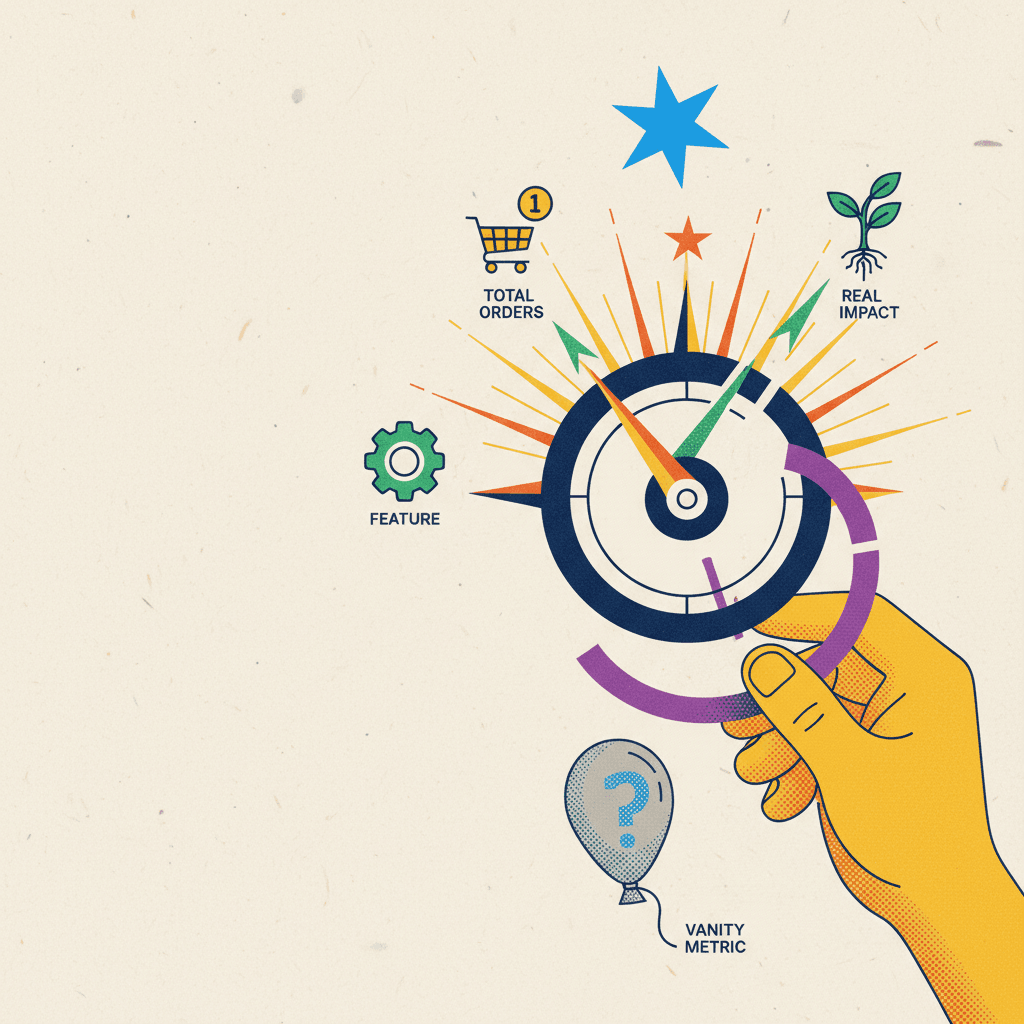
When Your North Star Isn't Yours
When you own a feature instead of the whole product, using the business north star (e.g. total orders) misattributes success and hides your real impact. Find out the best way to define success and avoid creating a dreaded vanity metric.
March 19, 2026